Community participation · 6 minute read
Display
Out in the world
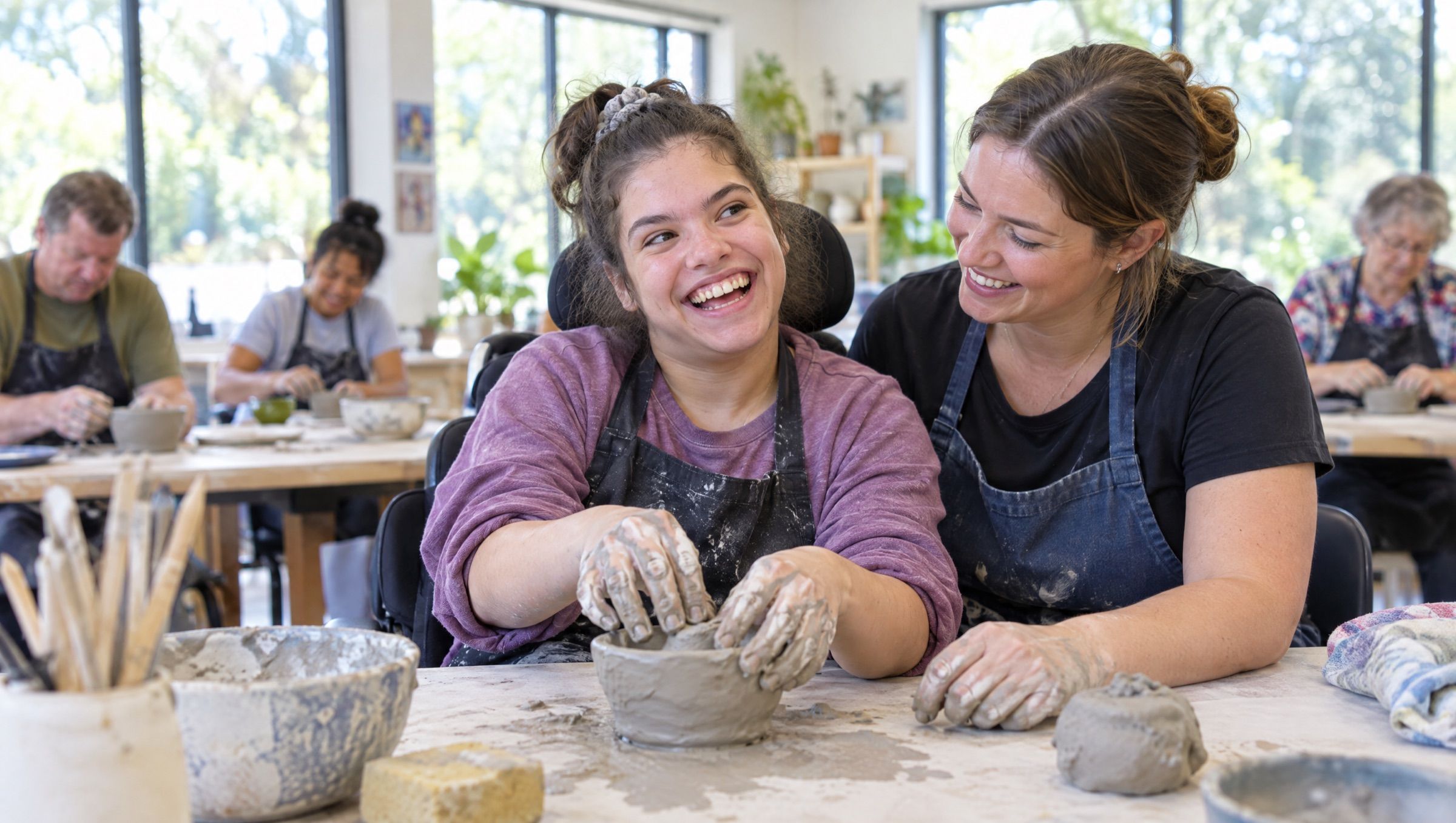
Getting out to the things you love, one to one or in a small group, and building the confidence to do more of them on your own terms.
Read this page in Easy Read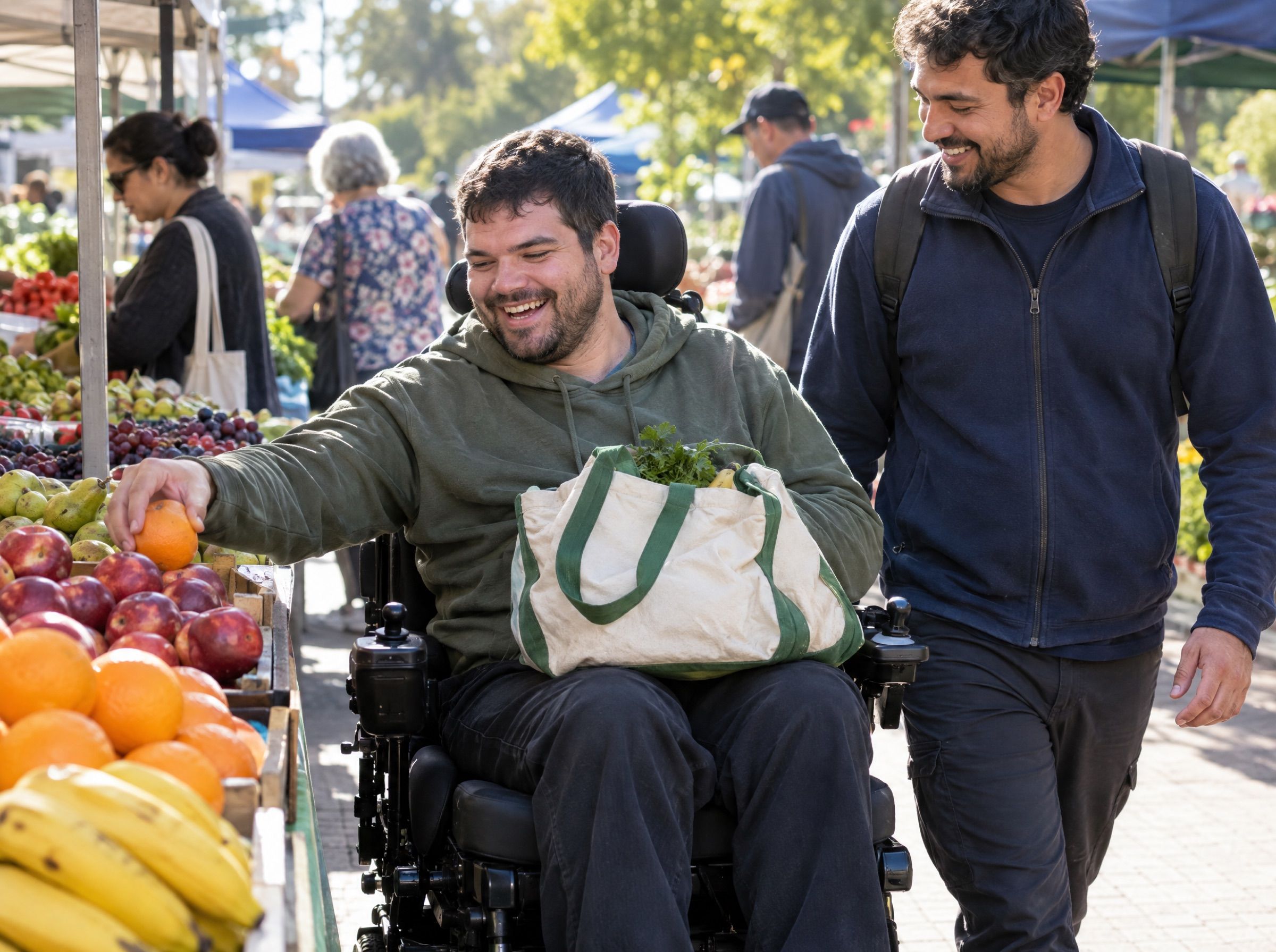
The basics
Community participation is support to take part in the life of your community: friends, interests, learning, giving back and getting ready for work.
You may see it in your plan under one of two names. They sound similar but do slightly different jobs.
Core supports
Support to go out and take part in activities. A worker comes with you, helps with whatever you need to join in, and makes the day work.
Capacity Building
Support focused on building your skills and confidence, so you can take part more independently over time. Think of it as learning to do more of it yourself.
Core supports help with everyday life. Capacity Building supports help you build skills. The NDIA decides which, if any, are in your plan. Your support coordinator can help you read it, and we are happy to explain what your plan says.
How it runs
One worker, just you. Good for trying something new, for travel training, or when you need support focused on you.
A few people who share an interest, with support shared between them. Good for friendships and being part of something regular.
Led by your goals
Your NDIS plan has goals in it. Good community participation starts there. Here is what that can look like.
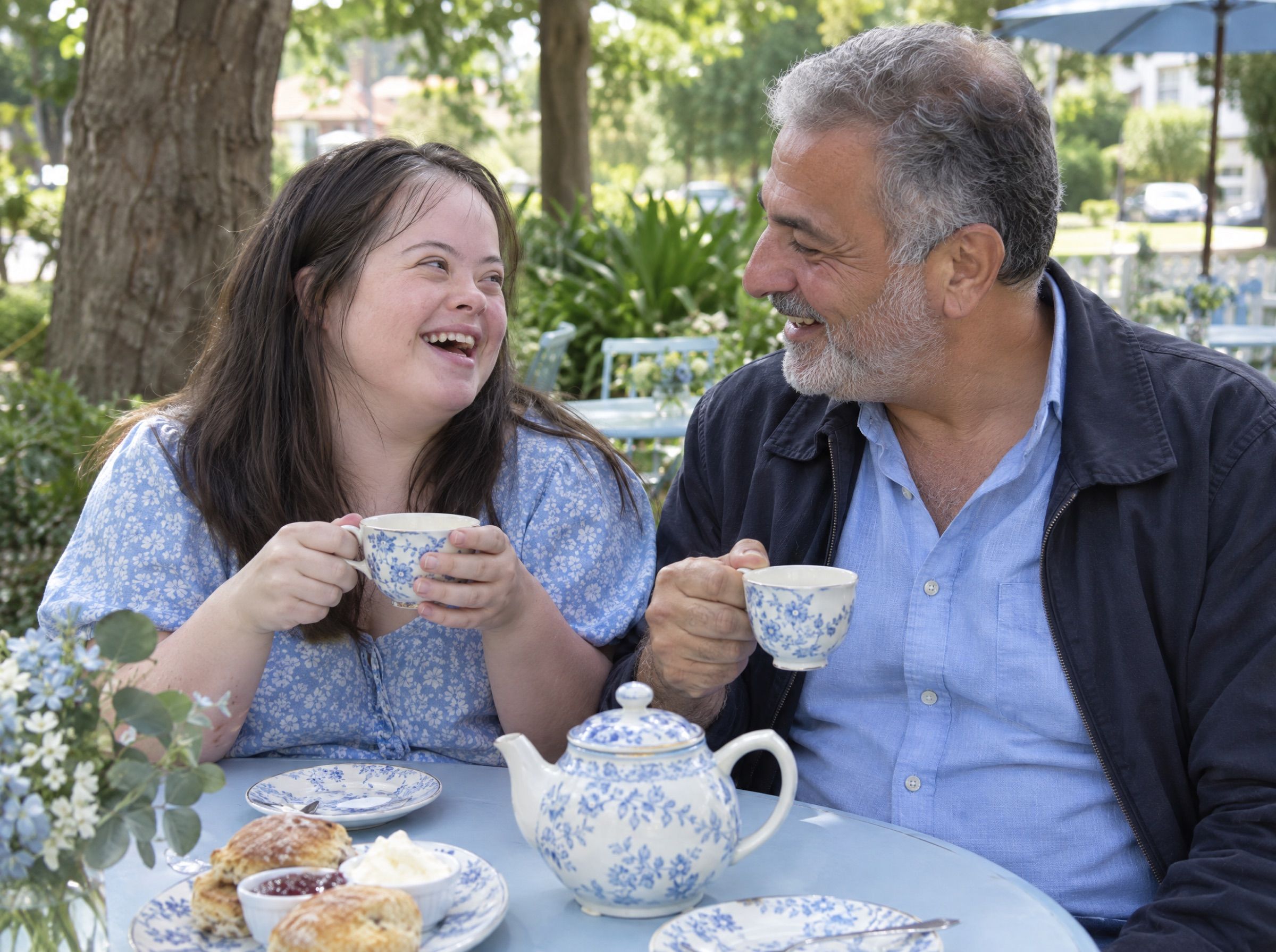
Finding a club, a group or a regular night out, and support to keep going until it feels like yours.
The gym, the pool, a walking group or a local team. We help with getting there, getting started and sticking with it.
A short course, TAFE or a class at the library. Support with enrolling, finding your way around and keeping on track.
Volunteering at a community garden, an op shop or an event. Using your skills and meeting people while you do.
Building the everyday skills work needs, like being on time, handling money and talking with customers.
Travel training: practising a trip until you can do it yourself, like the bus to the shops or the train to class.
Stepping back
When a goal is about independence, the aim is to need us less for that thing. So we plan the steps back from the start.
Not every goal is about stepping back. Sometimes the goal is simply to keep doing something you love, with the support you need to do it.
Build a week
This is an illustrative example, not a real person's plan. It shows how three or four regular activities can each serve a goal. Your week is built from your goals, your plan and your energy.
Monday Morning
Wednesday Afternoon
Friday Morning
Saturday Midday
The other days are yours. Rest counts too.
Transport and costs
This is where people most often get caught out, so we explain it before anything starts.
Transport can be claimed in different ways, depending on your plan and the activity. Before you start, we explain exactly how transport will be charged.
The NDIS usually funds the support, not the activity. Tickets, memberships, course fees and your own lunch are usually paid by you.
Your service agreement sets out what we charge for and how, against the NDIS Pricing Schedule 2026–27. Read how our pricing works.
Alongside other support
Community participation often sits alongside other support. Someone in Supported Independent Living might go swimming with us on Mondays. Someone who uses in-home support for mornings might do travel training on Saturdays.
You can use us for one part of your plan and someone else for another. It is your choice. See your choice, protected, and how getting started works.
Families: what to ask and what the terms mean.
Support coordinators: how we work with you, or make a referral.
Read our standards.
Questions
Community participation is support to take part in social, economic and community life: seeing friends, joining groups, sport, study, volunteering and building skills for work. It happens out in the community rather than at home.
It is usually funded from Core supports, in the category called Assistance with Social, Economic and Community Participation. Support focused on building skills and confidence may be funded from Capacity Building, in Increased Social and Community Participation. The NDIA decides what is in your plan. Prices must sit within the NDIS Pricing Schedule 2026–27.
Usually not. The NDIS funds the support, not the activity itself. Costs like a cinema ticket, a gym membership or a course fee are usually paid by you. We will talk through expected costs with you before you start.
Transport can be claimed in different ways depending on your plan and the activity, for example a worker's travel with you, or transport funding in your plan. Before you start, we explain exactly how transport will be charged, so there are no surprises. See how our pricing works.
Both. Some people like one to one support, especially when trying something new. Others enjoy a small group with people who share an interest. Many people mix the two.
Travel training is practising a trip, step by step, until you can make it on your own. We start by travelling together, then gradually step back, for example by meeting you at the other end, until you do not need us for that trip.
It can help you build the everyday skills and confidence that work needs, like routines, travel and talking with people. Finding and keeping a job may also be supported by other NDIS supports or employment services. Your support coordinator can help you work out the options.
Yes. Your goals lead. We suggest ideas if you want them, but it is your week and your choice. If something is not working, we change it.
Yes. Support in the community is usually funded separately from SIL. You can use us, or a different provider, for community participation. Read about Supported Independent Living.
Related guides
Community participation · 6 minute read
Tell us about your goals, and we will talk through how community participation could help. There is no cost or commitment to talk.