Supported Independent Living · 6 minute read
Display
SIL
Support at home every day, rostered around your plan, your routines and the people you live with. In your home, shared or on your own.
Read this page in Easy Read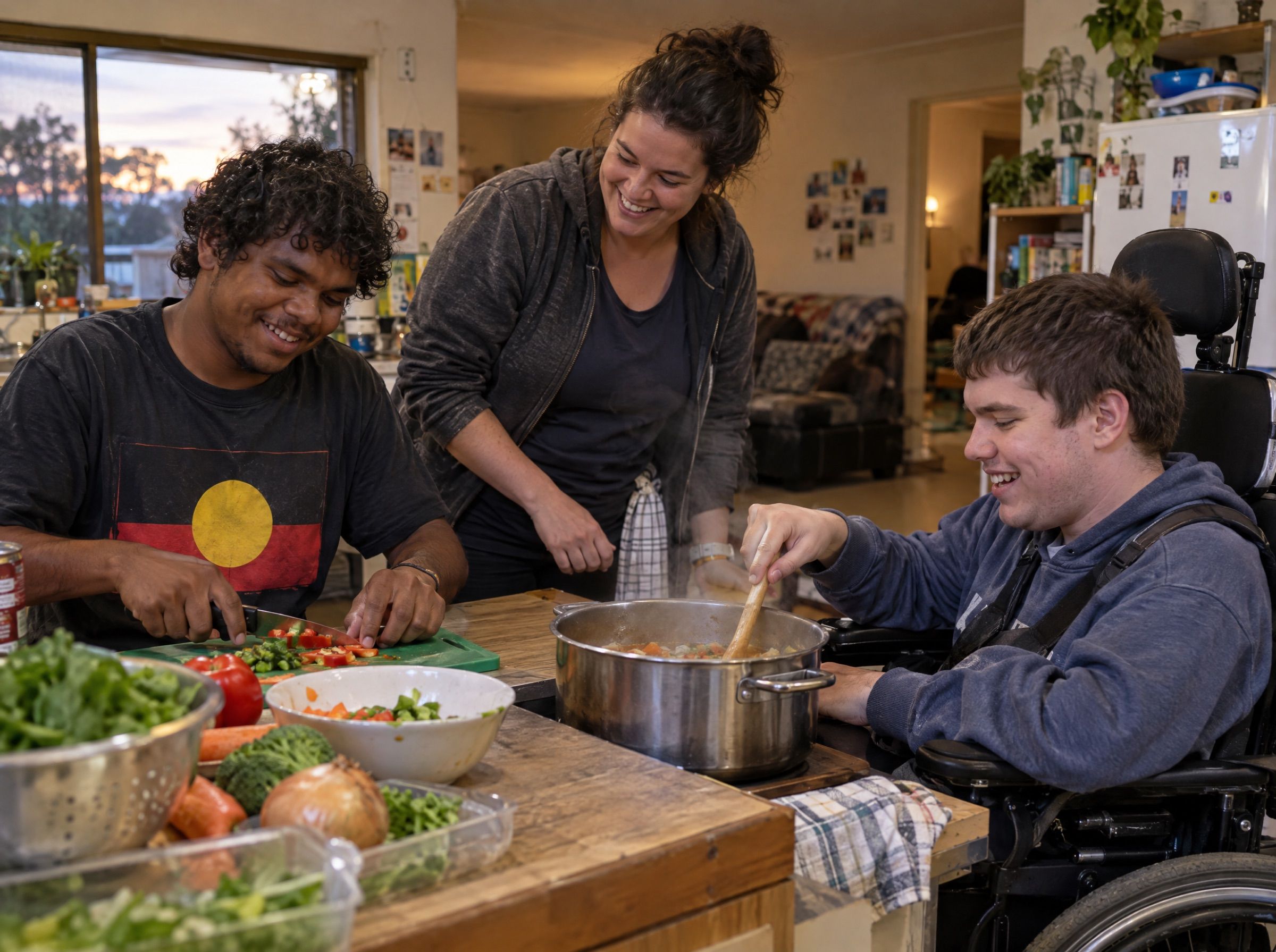
The basics
Supported Independent Living (SIL) is help with daily life, provided in your home, by a team that works to a roster.
People often think SIL is a place. It is not. SIL is the support: the people who help with the morning routine, dinner, the washing, the budget and the night. Where you live is a separate question, with a separate agreement.
SIL is usually for people who need a significant amount of support across the day, often with some support overnight. Whether SIL is in your plan is decided by the NDIA.
Funded in the Core supports part of your NDIS plan. It pays for the people who help you, never for the home itself.
Specialist Disability Accommodation (SDA) is a home built for people with very high support needs. It is funded separately, and only some people are eligible.
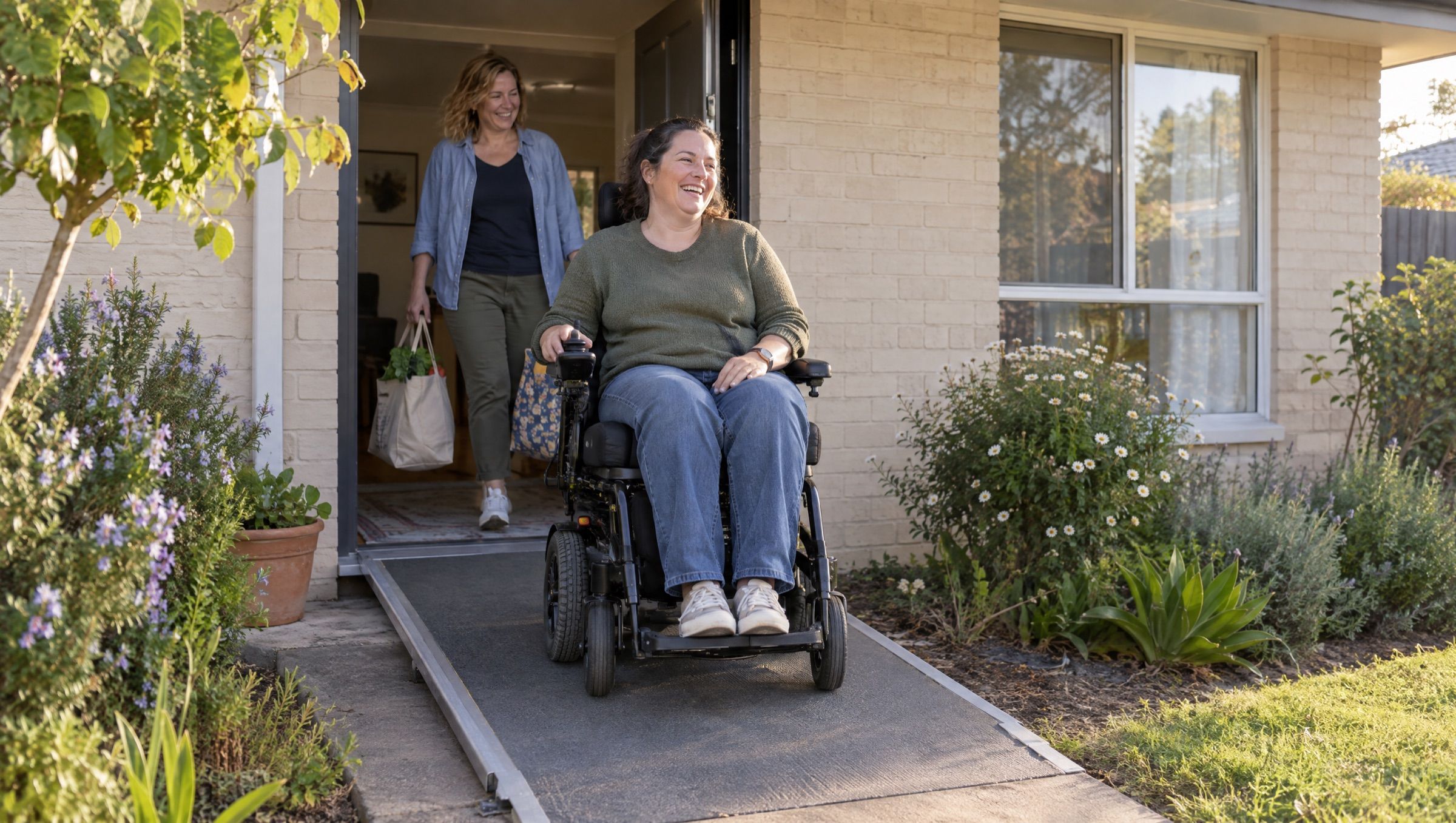
SIL can be delivered in a rental, a social housing home, a home you own or an SDA home. Shared with housemates, or on your own.
Money, clearly
Knowing this early saves a lot of surprises. SIL funding pays for support. Everyday living costs are yours, the same as for anyone renting a home.
These are paid from your own income, such as the Disability Support Pension. Commonwealth Rent Assistance may help with rent, depending on your situation. Services Australia can tell you whether you are eligible.
Support to go out into the community is usually funded from a different part of your plan. See community participation, and read how our pricing works.
How it is worked out
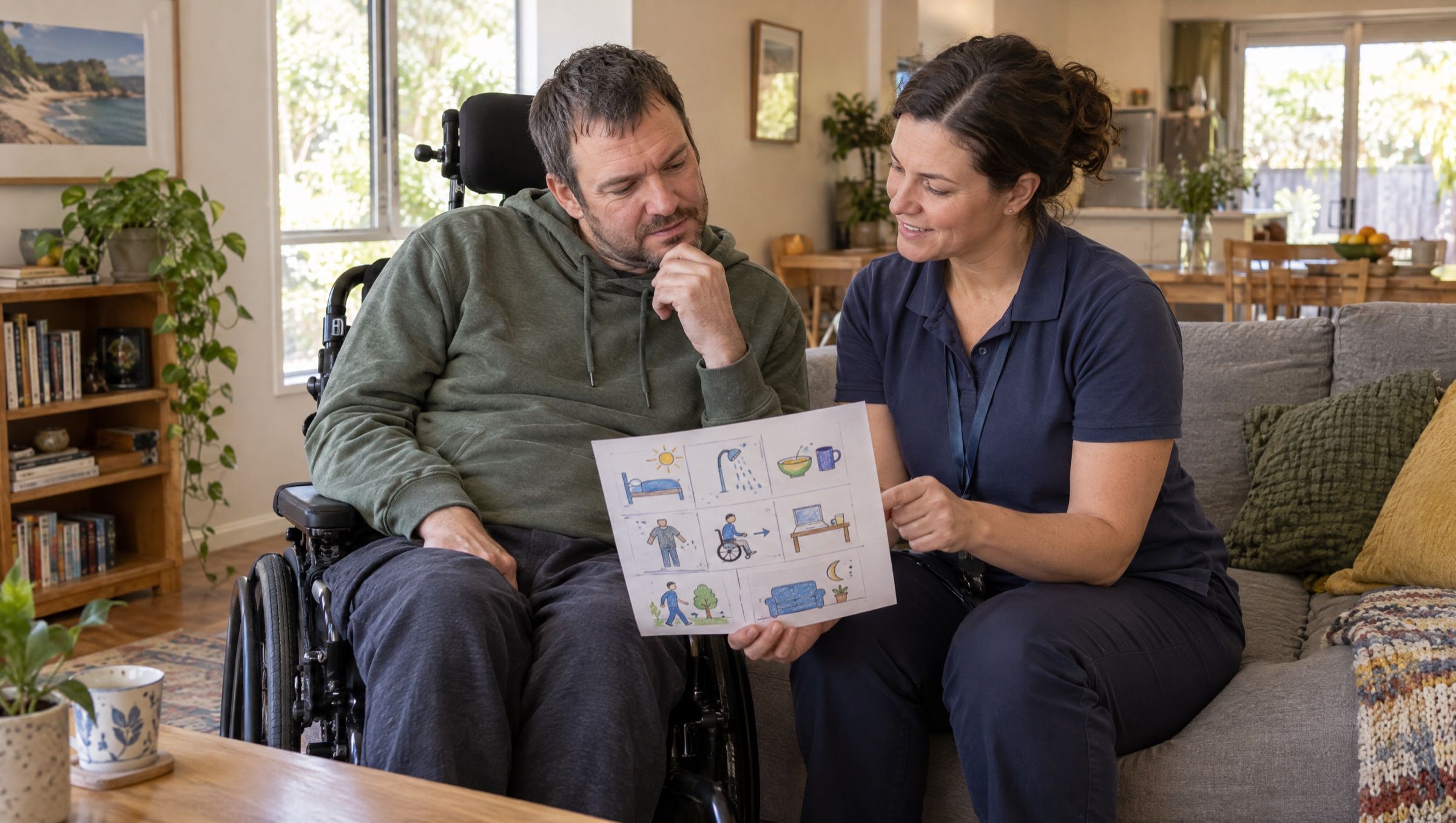
A Roster of Care is a week-long picture of your support: which hours, what help, and whether it is one to one or shared. It is the heart of SIL, so we build it with you, not for you.
We talk with you, and the people you want involved, about your routines, what you can do yourself and where you need a hand.
Hour by hour, we map when support is needed, what kind, and whether it is shared or one to one. Including nights.
You read it, question it and change it. Nothing goes further until it matches the life you want.
The roster becomes our SIL quote. The NDIA considers it with other information, such as your assessments, and decides the funding.
Needs change. We review the roster with you, and if it has changed a lot, a funding review can be requested.
The NDIA decides what is funded, not us, and prices must sit within the NDIS Pricing Schedule 2026–27. The way SIL is assessed can change as the NDIS changes, so check the current process with your support coordinator or the NDIA. Read how getting started works.
Shared support
In a shared home, some support is shared between housemates. A ratio just says how many people one worker is supporting at that moment. In the pictures, the dark dot is the worker and the yellow dots are the people sharing that worker.
1:1
One worker supports only you at that time. Common for personal care, or times when you need someone focused on you.
1:2
One worker supports two people at the same time, for example two housemates cooking dinner together.
1:3
One worker supports three people at the same time, for example during a quiet evening at home.
Most rosters mix ratios across the day. You might have 1:1 support for your morning routine and share support with housemates in the evening. If you need one to one support, your roster should say so, and we will not quietly share it.
Overnight
If your plan includes support overnight, it is usually one of two kinds. Your roster says which, and why.
A worker is awake and working through the night. This suits people who need regular help overnight, such as repositioning, frequent checks or support that cannot wait.
Sometimes called a sleepover. A worker sleeps at the home and gets up if someone needs them. This suits people who need help now and then, or peace of mind that someone is close.

Living with others
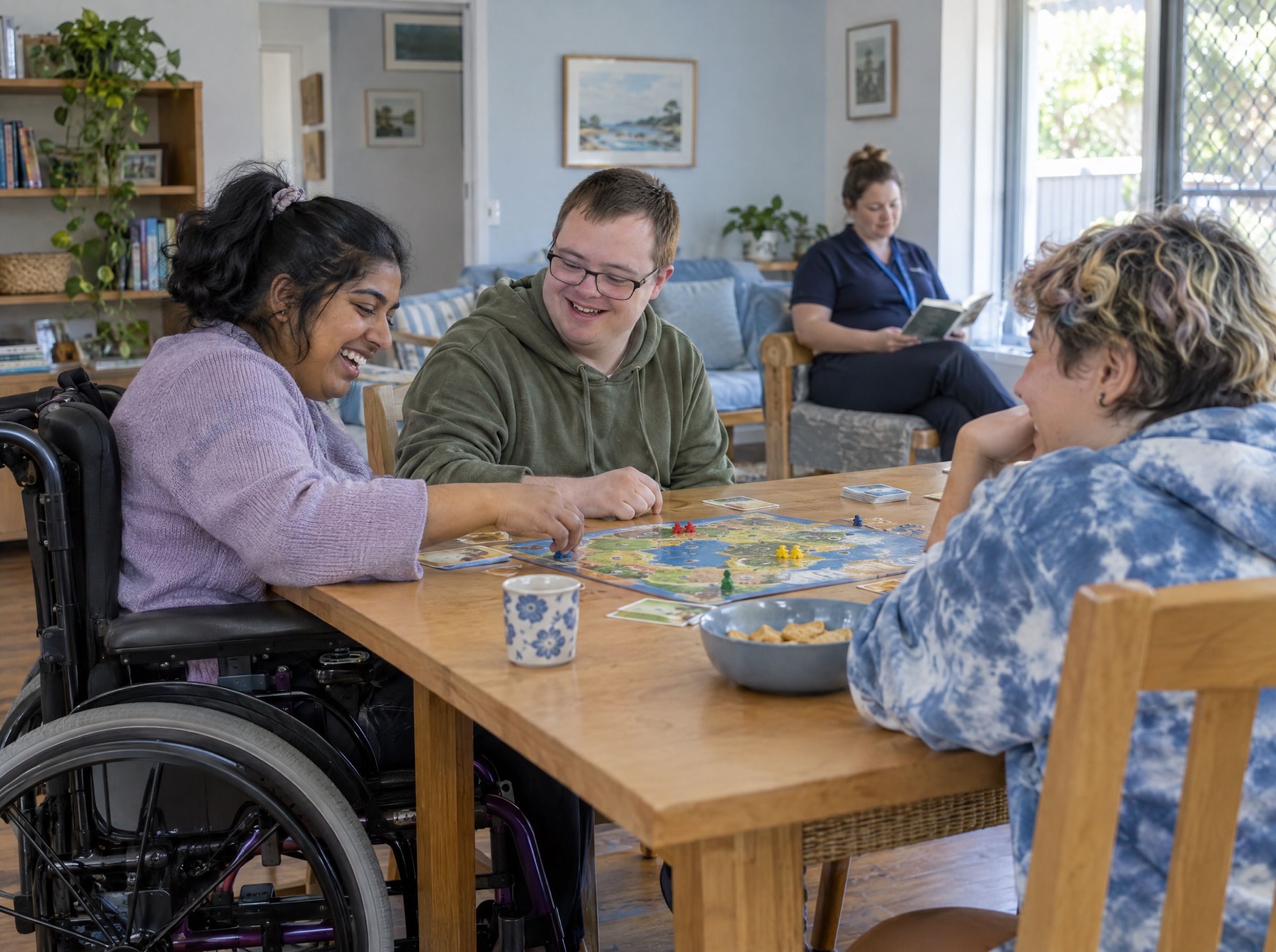
Sharing a home works when the people in it get along well enough to live together day after day. That is what we mean by fit. It is not about being the same. It is about whether daily life will work for everyone.
Your future housemates get a say too. If we do not think a home is the right fit for you, we will tell you, even when it means a longer wait.
Daily life
These are examples, not a set menu. Your roster is built from your week.
Some people want help with every step of getting ready. Others want a prompt and a coffee. Your roster says which.
Planning meals, shopping lists and cooking together. You pay for the food; the support is what SIL covers.
Help to read bills, keep to a budget and remember appointments, so more of it becomes yours to run.
Evenings, weekends and quiet time. Support is around when you need it and steps back when you do not.
House meetings, shared chores and working out the small stuff, like who gets the bathroom first.
If your plan includes overnight support, someone is there through the night in the way you have agreed.
Your choice, protected
Your home and your SIL support are separate agreements, each explained in plain language before you sign.
If our support is not right for you, you can change provider and keep your home. Your service agreement sets out the notice.
If you move to another provider, we work with them so nothing important about your support is lost.
Compare
These are three different ways to get support where you live. The right one depends on how much support you need, who you want to live with and what is in your plan. This is a general guide only.
| Supported Independent Living (SIL) | Individualised Living Options (ILO) | In-home support | |
|---|---|---|---|
| Who it often suits | People who need support at several points every day, often including overnight. | People who want a flexible arrangement designed around them, often mixing paid support with support from people in their life. | People who need help with some parts of the day and live on their own or with family. |
| Where you live | A shared home or your own home. It can be a rental, social housing, a home you own or SDA. | Often your own home, with a host, or with a housemate who gives some support. | The home you already have. |
| How support is arranged | A Roster of Care that becomes a SIL quote, with support that can be shared between housemates. | Usually an exploration and design stage first, then a support model built for you. | Booked shifts at the times you choose, from Core supports and sometimes Capacity Building. |
| Rent, food and bills | Paid by you. | Paid by you. | Paid by you. |
Individualised Living Options (ILO) is an NDIS home and living option. We describe it here so you can compare; ask your support coordinator or the NDIA whether it could suit you. Not sure where to start? Try find the right support or read about in-home support.
A quick check
If several of these sound like you, SIL may be worth talking about with your support coordinator and with us.
Four short questions point you to the support that fits your week.
Supporting someone? For families. Referring? For support coordinators or make a referral.
Read about our standards.
Questions
No. SIL funds support, not housing. Rent, food and bills are paid from your own income, such as the Disability Support Pension. Commonwealth Rent Assistance may help with rent, depending on your situation. Services Australia can tell you whether you are eligible.
No. Specialist Disability Accommodation (SDA) is funded housing for people with very high support needs, and only some participants are eligible. SIL can be delivered in any suitable home, including a private rental, a social housing home, a home you own, or an SDA home.
You should always have a say. When a vacancy comes up in a shared home, you can meet the people who live there, visit more than once, and take your time. Your housemates have a say too. If we do not think a home is a good fit for you, we will tell you honestly.
You can change your SIL provider without moving house, because your home and your support are separate agreements. Your service agreement sets out how much notice to give. We will work with you and your new provider so the handover is safe. Read more on your choice, protected.
SIL is funded in the Core supports part of an NDIS plan. Your provider prepares a quote based on your Roster of Care, and the NDIA considers it alongside other information, such as functional assessments, before deciding what to fund. The NDIA decides the funding, not us. Prices must sit within the limits in the NDIS Pricing Schedule 2026–27. See how our pricing works.
A Roster of Care is a week-long picture of the support you need: which hours, what kind of support, and whether it is one to one or shared with housemates. We build it with you, and it becomes the basis of the SIL quote.
Yes. It is your home. Family and friends can visit, stay in touch and be part of your life in the way you choose, while respecting that housemates share the home too. Read our guide for families.
Tell us as early as you can. We will review your roster with you. If the support you need has changed a lot, the NDIA can be asked to review your SIL funding, and your support coordinator can help with that.
No. You can use different providers for different parts of your plan, such as therapy or community participation. Some people like one team for everything; others prefer to mix. It is your choice.
No. Many people share support with housemates, but SIL can also be arranged for someone living on their own when their needs and their plan support it.
Related guides
Supported Independent Living · 6 minute read
NDIS explained · 6 minute read
Supported Independent Living · 6 minute read
Tell us a little about you or the person you support, and we will talk through whether SIL fits. There is no cost or commitment to talk.