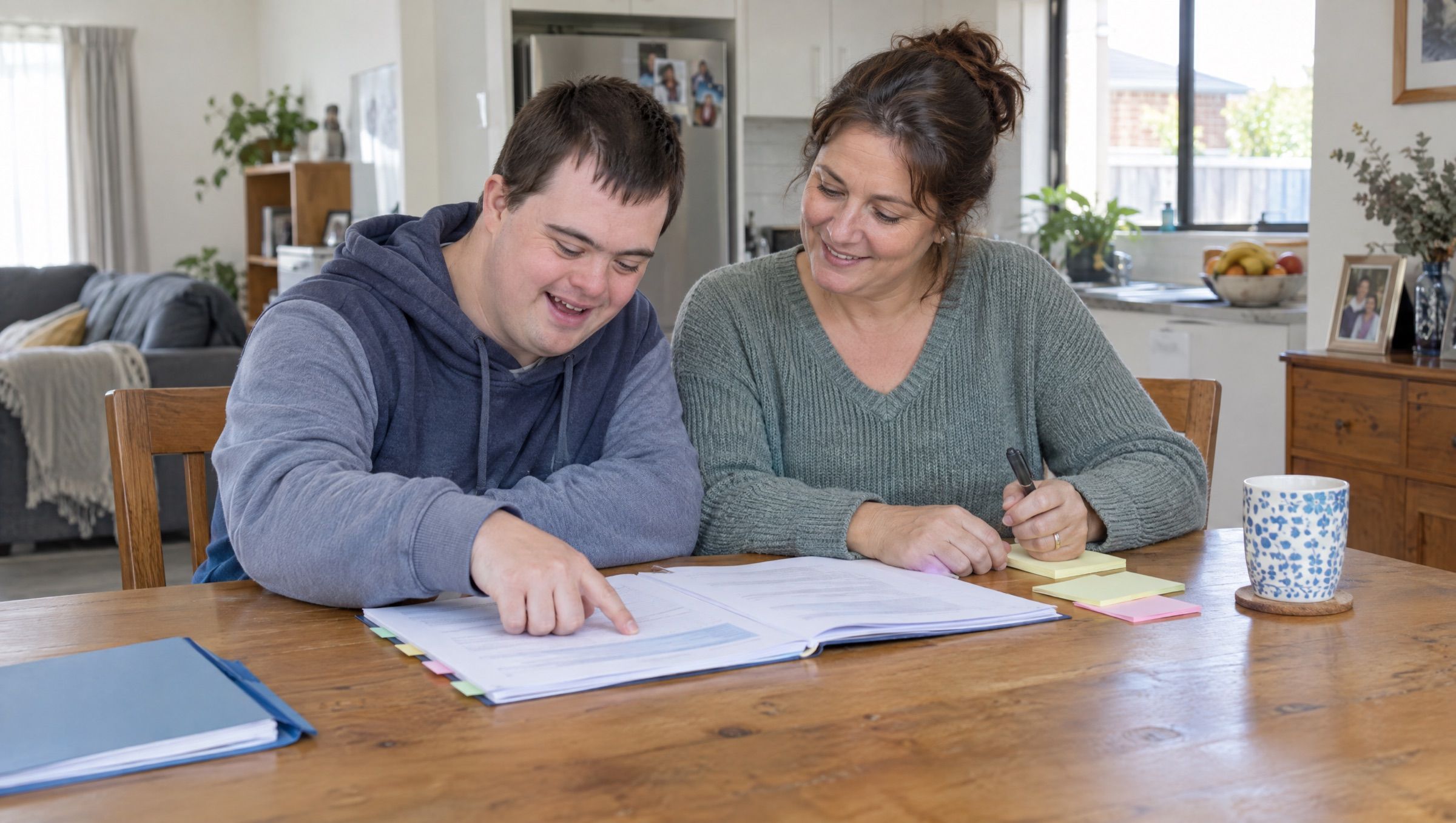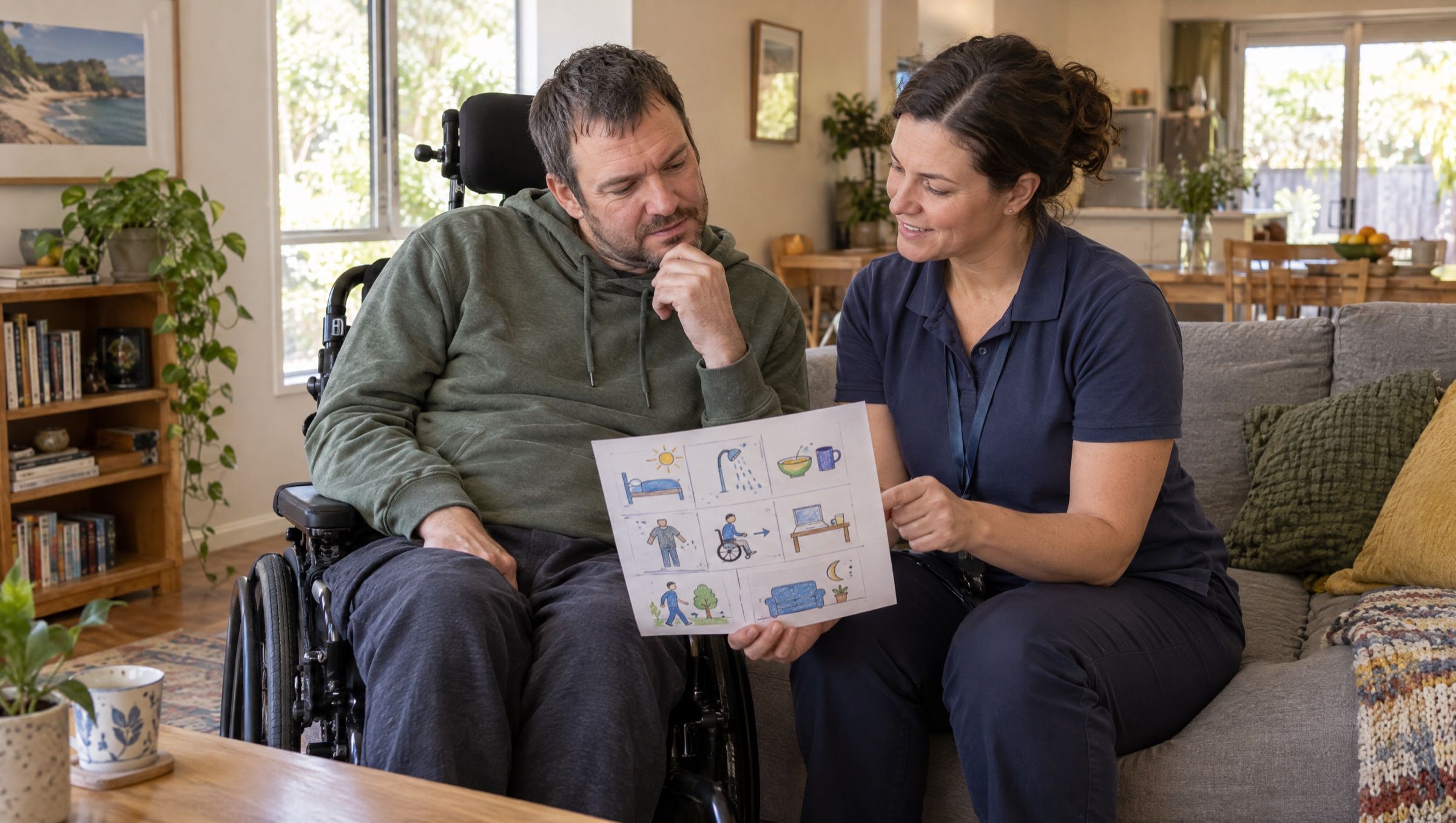
Wanting to move out of the family home, change how you are supported where you live, or get more support at home is a big step. If it means asking the NDIA for home and living supports, the way you prepare for your next plan reassessment can make a real difference.
This guide walks through how to get ready. It is general information only. The NDIA’s process for home and living requests has changed over time and may change again, so always check the current steps with the NDIA, your local area coordinator (LAC) or your support coordinator.
What home and living supports are
Home and living supports are the NDIS supports that help you live as independently as possible in a home that suits you. They include:
- Supported Independent Living (SIL): help with daily tasks at home, usually across much of the day and often overnight.
- Individualised Living Options (ILO): a support arrangement designed around one person, often with a host or housemate.
- Specialist Disability Accommodation (SDA): funded housing for people with extreme functional impairment or very high support needs.
- Medium Term Accommodation (MTA): a place to stay for a limited time while your long-term home is not ready.
- Short Term Accommodation (STA): short stays with support, sometimes called respite.
Some people also need assistive technology or home modifications to live well at home. These are funded in Capital supports.
The NDIA decides which, if any, of these are reasonable and necessary for you. A provider cannot promise that any of them will be in your plan.
What a plan reassessment is
A plan reassessment is when the NDIA looks at your plan again and makes a new one. It happens when your plan is due to be reassessed, or earlier if your situation changes or you ask for one. If you want home and living supports added or changed, the reassessment is where that decision is usually made.
Step 1: Start early
Evidence takes time. Allied health professionals can have waiting lists, and reports need to be written, read and sometimes corrected. Look at the date your plan is due to be reassessed and count back. Starting several months ahead is not too early, especially if you need a new assessment.
If your situation has changed suddenly, for example a family carer can no longer support you, do not wait for your plan’s reassessment date. Tell the NDIA straight away, and ask your support coordinator or LAC for help.
Step 2: Get clear on your goals
Your goals tell the NDIA what you want your life to look like. For home and living, they might be about where you want to live, who with, and what you want to be able to do for yourself.
Good goals are in your own words and say what matters to you. For example: “I want to move out of my parents’ home and live with people my own age” or “I want to cook my own dinner most nights”. Talk with the people close to you, and write them down before your planning meeting.
Step 3: Gather the right evidence
The NDIA will want to understand how your disability affects daily life and why the support you are asking for is needed. Evidence often includes:
- A functional capacity assessment, usually by an occupational therapist (OT). This describes how you manage everyday tasks and what support you need.
- An OT report with recommendations about the kind of home and support that would suit you.
- Other allied health reports, such as from a physiotherapist, speech pathologist or psychologist, where they are relevant.
- A behaviour support plan, if you have one.
- Letters or statements from you, your family, carers or others who know you well, describing daily life and what has changed.
- Information about your current living situation, including the informal support you get now and whether it can continue.
Ask the people writing reports to describe what happens on a typical day and night, with real examples, and to explain how their recommendations link to your goals.
Step 4: Describe your week honestly
For SIL, the NDIA will usually look at a Roster of Care: a week-long picture of the support you need, hour by hour, including whether support is one to one or shared with housemates, and what happens overnight. A provider usually prepares this with you, and it forms part of the SIL quote.
When you describe your week, be honest about your hardest days, not only your best ones. It can help to keep a simple diary for a couple of weeks, noting the support you needed and when.
Step 5: Explore the options
The NDIA will want to know that the support you are asking for is the right fit. Before your reassessment, think about:
- Have you looked at different ways of living, such as ILO, SIL in a shared home or support in your own home?
- Have you tried anything already, such as a short stay to see what living away from home feels like?
- What do you want, and what would not work for you?
Showing that you have thought about the options helps the NDIA understand why you are asking for a particular support.
Step 6: Ask questions before and during the meeting
Before your meeting, ask the NDIA or your LAC:
- What evidence do you need for a home and living request right now?
- Are there forms I should complete?
- Who will make the decision, and when will I hear?
At the meeting, take your notes and a support person if you want one. If you do not understand something, ask for it to be explained again.
After the decision
When you receive your new plan, read it carefully. Check whether the home and living supports you asked for are included, and if not, whether the NDIA has given reasons.
If you disagree with a decision, you can ask the NDIA for an internal review of that decision. There are time limits for asking, so do not wait. If you still disagree after the review, you may be able to apply to the Administrative Review Tribunal. A disability advocate can help with this, at no cost to you.
Separate housing and support
If home and living supports are funded, remember that where you live and who supports you are separate. Your support provider and your housing provider should have separate agreements with you, and you should be able to change your support provider without losing your home. Our guide SIL and SDA: what is the difference? explains why that matters.
How we can help
If you are thinking about Supported Independent Living, we can talk with you about your week, work through a Roster of Care with you and explain what a SIL quote involves. We cannot decide what the NDIA funds, and we will always tell you that plainly. Contact us to talk it through, or read about Supported Independent Living. For terms you are not sure about, see our NDIS glossary.
This guide is general information, not advice about your plan. NDIS rules change from time to time. For your own situation, check with the NDIA, your support coordinator or your plan manager.
How Manora Care provides Supported Independent LivingHelp with daily life in a shared or single home, rostered around your plan and the people you live with.