Everyone needs a break sometimes. For people with disability and the families who support them, a short stay away from home can be a chance to rest, try new things, meet new people and come home refreshed. In the NDIS, this is usually called Short Term Accommodation, or STA. Many people still call it respite.
This guide explains what STA is, what it covers and how to plan a stay. It is general information only. The rules about STA can change, so check how it works in your plan with the NDIA, your plan manager or your support coordinator.
What Short Term Accommodation is
Short Term Accommodation is funding for a short stay away from your usual home, with support included. A stay might be a night, a weekend or a little longer. It can be on your own with support, or with a small group of other people.
People use STA for different reasons:
- A break for you: time away from your usual routine, somewhere new.
- A break for the people who support you: so family carers can rest, travel or look after their own health.
- A chance to try something new: such as staying away from home for the first time, or building confidence and skills.
- Support during a change: for example, if your usual carer is unwell or away.
What STA covers
STA funding is designed to cover the whole stay. It usually includes:
- Support from workers during your stay, for personal care and daily tasks
- Accommodation: the place you stay
- Meals during the stay
- Activities the provider offers as part of the stay
The provider should tell you in writing what is included and whether anything costs extra, such as outings with entry fees. Ask about this before you book.
How STA is funded
STA is usually funded in the Core supports part of your plan, under help with daily life. Your plan may include STA specifically, or you may be able to use flexible Core funding for it. Newer plans can work differently, so check how STA fits your plan before you book.
Because the NDIA decides what is funded, a provider cannot promise that STA is in your plan or that you can use your funding for a particular stay. If you are not sure, ask your plan manager, support coordinator or the NDIA.
If you think you need more STA than your plan allows, for example because your family’s situation has changed, tell the NDIA. You can ask for a plan reassessment if your needs have changed.
STA is not the same as other supports
STA is often confused with a few other supports. Here is how they differ.
Medium Term Accommodation (MTA)
Medium Term Accommodation is for people who need somewhere to live for a limited time because their long-term home is not ready yet, for example while home modifications are being finished or a Specialist Disability Accommodation (SDA) home is being built. MTA covers the accommodation only, not your support, which is funded separately.
STA, by contrast, is a short break, and it includes support.
In-home support while a carer has a break
Sometimes people use the word respite to mean a support worker coming to your home so your family carer can go out. That is not STA. It is usually funded as everyday support in your Core budget, the same as other in-home support.
Supported Independent Living (SIL)
SIL is ongoing support at home, usually across much of the day, for people who live away from family or want to. It is not a short stay. Some people use STA to try staying away from home before they decide whether SIL might suit them.
Planning a good stay
A good STA stay starts well before the bags are packed.
Before you book
Ask the provider:
- Where is the stay, and what is the home like? Can I visit first?
- Who else will be staying at the same time?
- How many workers will be there, during the day and overnight?
- What activities are planned, and can I choose what I do?
- What is included in the price, and what costs extra?
- How will you support my communication, health and personal care needs?
- How do you handle medication?
- What happens if I want to go home early?
Share what matters
Help the provider get to know you. Share:
- your routines, likes and dislikes
- how you communicate, and how to tell when something is wrong
- health information, medication and any support plans you have
- food preferences, cultural and faith needs
- who to call, and when
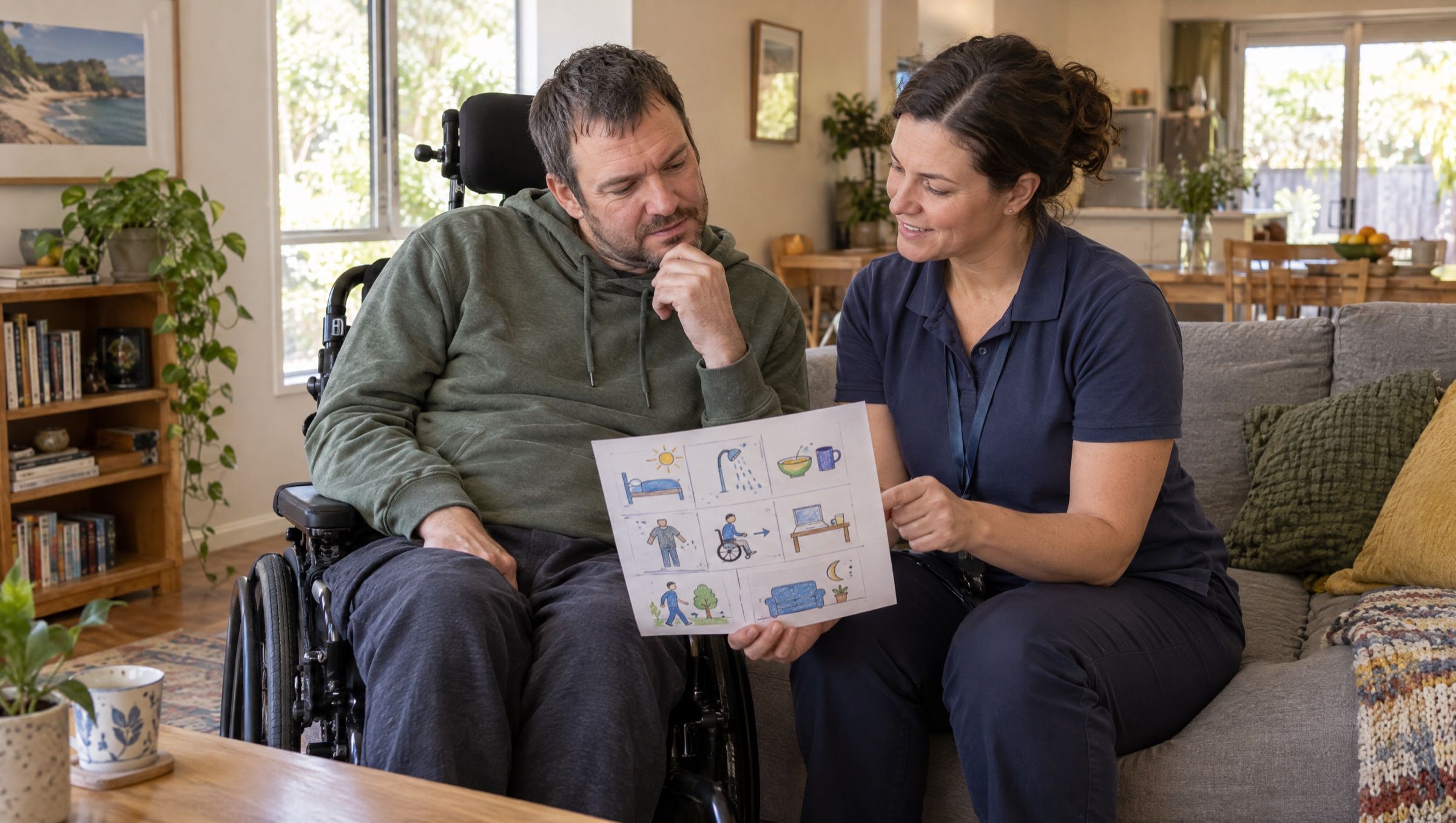
A one-page profile can be a simple way to share the most important things. Some families keep one ready for every stay.
The first stay
If it is your first time staying away from home, a short first stay can help. Some people start with a day visit, then a single night, before trying a longer stay. Going with a friend can help too.
For families and carers
Taking a break is not a sign that you love the person you support any less. Rest helps you keep going, and time apart can help everyone build confidence.
If you are a carer, you may also be able to get support in your own right. The Australian Government’s Carer Gateway offers services and support for carers. Your own GP can be a good place to start if your health is suffering.
Your rights during a stay
During STA, you have the same rights as at any other time. The provider must follow the NDIS Code of Conduct, respect your privacy and choices, and keep you safe. If something does not feel right, you can raise it with the provider, and you can contact the NDIS Quality and Safeguards Commission at any stage.
Talk to us
If you would like to talk about support at home or in the community, or about what might fit your plan, contact us. You can also read our guide for families, and our NDIS glossary explains the terms used here.
This guide is general information, not advice about your plan. NDIS rules change from time to time. For your own situation, check with the NDIA, your support coordinator or your plan manager.